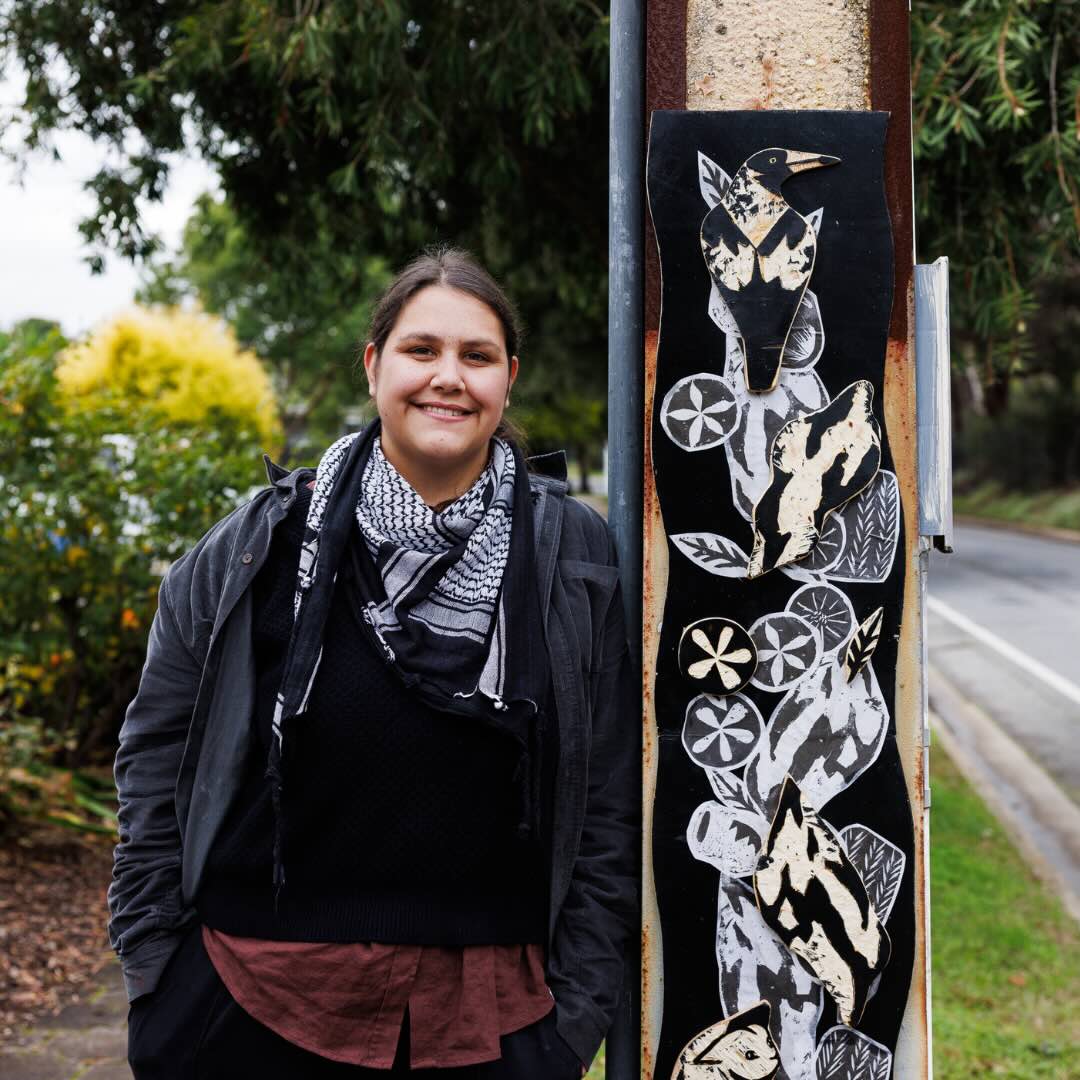
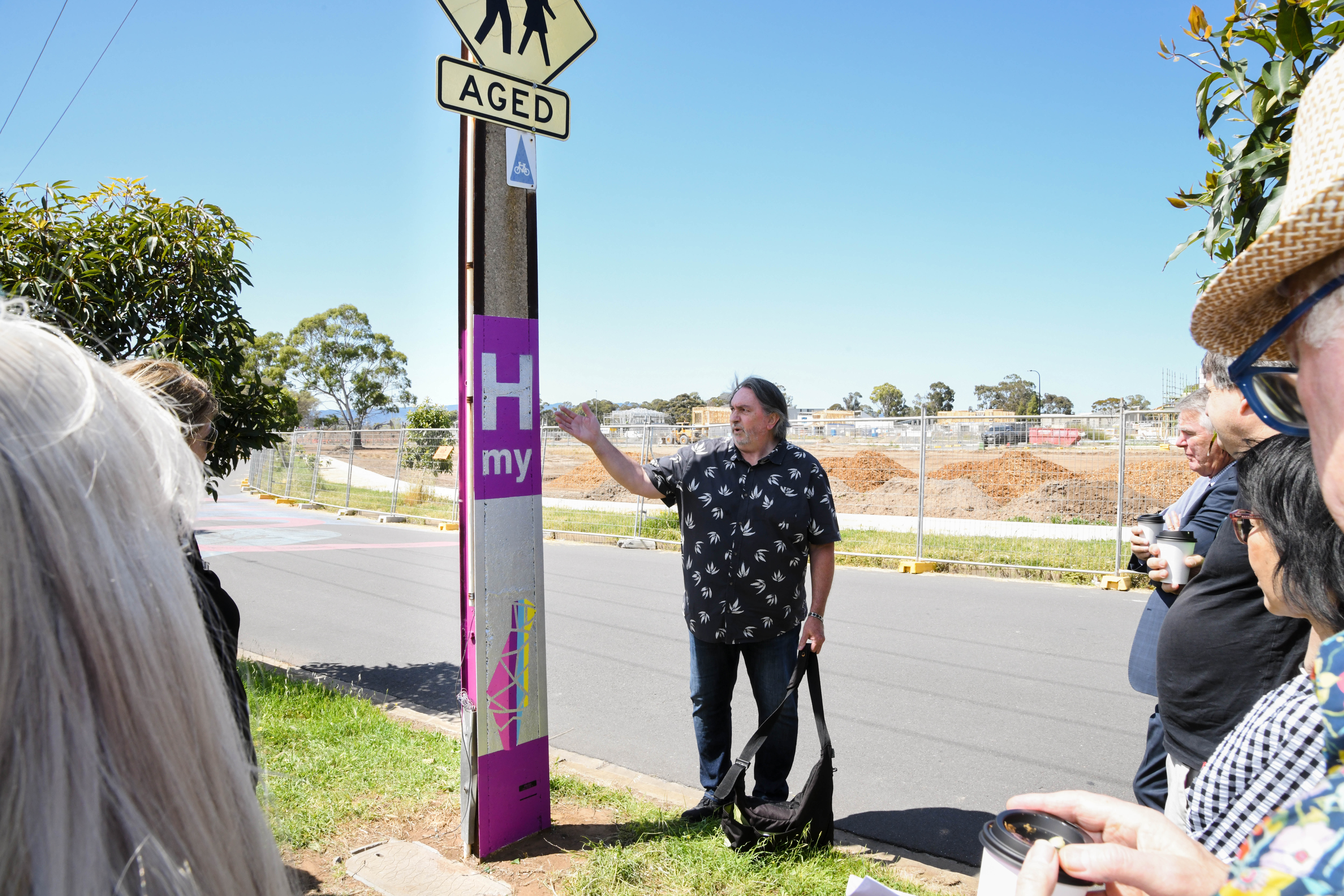
Over the last three years, we have partnered with SA Power Networks to offer emerging artists an exciting public artwork commission to make their mark on South Australia through the Stobie Pole.
The Stobie Pole Project is part of Helpmann Academy’s first-of-its-kind public art program. Established in 2016, the program aims to assist emerging creatives in gaining valuable experience and skills in negotiating the public art domain from concept to completion. Meanwhile, also contributes to making dynamic, liveable urban spaces and enhancing destination landmarks.
Since the launch of this collaboration between Helpmann Academy and SA Power Networks in 2022, 12 emerging Helpmann artists used this opportunity to make their mark on Adelaide’s dynamic public art scene.
We reached out to these 12 artists to discuss the impact of the Stobie Pole Project on their practice and its importance to emerging artists.
Miriam Sims: The opportunity to take part in creating public artworks with permanence and develop ideas I have been working on in sculpture into a two-dimensional, iterative design, was what drew me towards this project.
Anna Révész: I have always had an interest in public art and the opportunity it provides to push your art practice in new directions and towards new audiences.
Katherine Shierlaw: I was attracted to the opportunity to produce a public art work with the support of Christine Cholewa as a mentor and within the project framework set up by the Helpmann Academy.
Danny Jarratt: Being mentored by Dave Court has given me invaluable experience and advice that would have been difficult for me to gain elsewhere. Dave has an endless wealth of knowledge when it comes to mural painting and public art that he is always willing to share with us. He is a pleasure to work with and very accommodating to our skillsets and knowledge.
Alice Hu: It was very inspiring to hear Seb Humphreys’ experience and perspective through his professional experience and practices on public art, they were extremely valuable and great advice, it is amazing to be able to work among him and he has been a very lovely mentor through this whole time.
Chelsie Morey: The mentorship we received from Christine Cholewa was fantastic! Before this project, I was definitely intimidated by the field of public art because there can be a lot of restrictions and safety measures involved that I had never had to consider in my work before. I learnt so much from hearing Christine talk about her past public art projects and she gave us first-hand advice on a lot of the practical questions surrounding application, production and installation.
Ellis Moseley: Take away 1: To be sensitive to the community.
Take away 2: To be aware how the works will be experienced from all viewing points.
Take away 3: How to fit conceptual ideas around technical requirements.
Ardian Mitton: Take away 1: Always wear a safety vest when installing in the public sphere. This helps you stay visible and not die when working near roads. Also
people don’t tend to question you because you look official.
Take away 2: Public art usually remains in place for a long time. When
designing for outdoor public display you really need to think about safety, longevity, and how much post-project maintenance work you’re willing to put in.
Take away 3: You will always need more silicone than you think you will.
Katherine Shierlaw: Take away 1: Be organised to stick to the deadlines.
Take away 2: Consider the installation from the very beginning.
Take away 3: Consider scale – what looks good in your studio may not translate to the distances that the work will be viewed from on-site.
Adrian Mitton: Public art is important because it instils and bolsters a sense of community and place-making within an area, connecting people to each other and to their surroundings.
Anna Révész: Public art is important because it offers a completely accessible way for the public to experience art. It also provides new perspectives of areas and environments and may prompt people to consider the spaces they are familiar with in a new and exciting way.
Tiarnie Edwards: I love public art so much because it has this really big opportunity to reflect the community that it’s in and that can have a really big impact. In places like the city, it is hard to connect with people and communities so you can create that with public art.
Alice Hu: I would absolutely love to the more sculptural and bigger pieces in the future when opportunity comes, it was been a great journey so far to brainstorm and create the works, and I would hate to not being able to do things like this again.
Chelsie Morey: I am very excited to continue working in public art – the work I created for the Stobie Pole Project felt like a big step in the right direction for me. Being able to create work that can directly interact with the communities it is inspired by has been a really special experience and I am already working on expanding this branch of my practice.
Chloe Noble: It was wonderful to be able to foster new connections within the Adelaide art scene with artists I had not worked with previously. I feel this project gave me the opportunity to crossover with artists not only from other disciplines but other institutions which I would not have met or worked with otherwise.
Neville Cichon: With multiple artists researching in the early phase we were able to share different evidence and perspectives to inform our concepts. The range of research and concept development techniques shared was also diverse and encouraged me to challenge my approach.
Chelsie Morey: I found it really exciting to work alongside Tiarnie, Adrian and Kate. This was my first project where I got to work closely with artists in completely different disciplines to mine, and it was so interesting to see how everyone applied their unique skillset to the task. Even though our projects were so different, we all had similar problems and questions pop up along the way, mostly about weatherproofing, installation and the more technical parts of the job, so it was a great experience to be able to come together during our workshop sessions and figure these things out as a group.
Anna Révész: Opportunities like this allow me to continue engaging with audiences in new ways, and to try out new methods and techniques that I may not otherwise have the time, budget or space to explore. They also allow me to continue developing new concepts and to broaden my artistic network by working with other artists.
Abby Pumpa: It introduced me to the process of creating public art, which was something that felt very daunting to approach before. But because of this opportunity, I hope to do more (maybe even bigger) projects in the future.
Katherine Shierlaw: Having a project like this where I had to make a plan and a budget and consider the logistics for fabrication and final installation will inform how I approach projects in the future. It has given me the confidence to seek out commissions.
Adrian Mitton: It feels good to have my work become part of the public space. I like people being able to see and interact with my creations. I appreciate this opportunity to be a part of the fabric of the community, weaving my own unique thread into its tapestry.
Alice Hu: It was super fun and enriching to work with the community and the lovely people who were involved with this! I hope the works I created will bring them joy and a stronger connection to nature, their culture, and their community.
Chelsie Morey: It feels fantastic to have my work in the public space. I love that the pieces can now take on a life of their own and age with the environment around them. I like to imagine how the people who live or work in those areas interact with them in their day-to-day lives. It’s a very different feeling to work in a gallery setting where it is protected and only there to be looked at. I feel like these pieces are making more of a direct impact than a lot of my previous work.
2022 The Stobie Pole Project Artists:
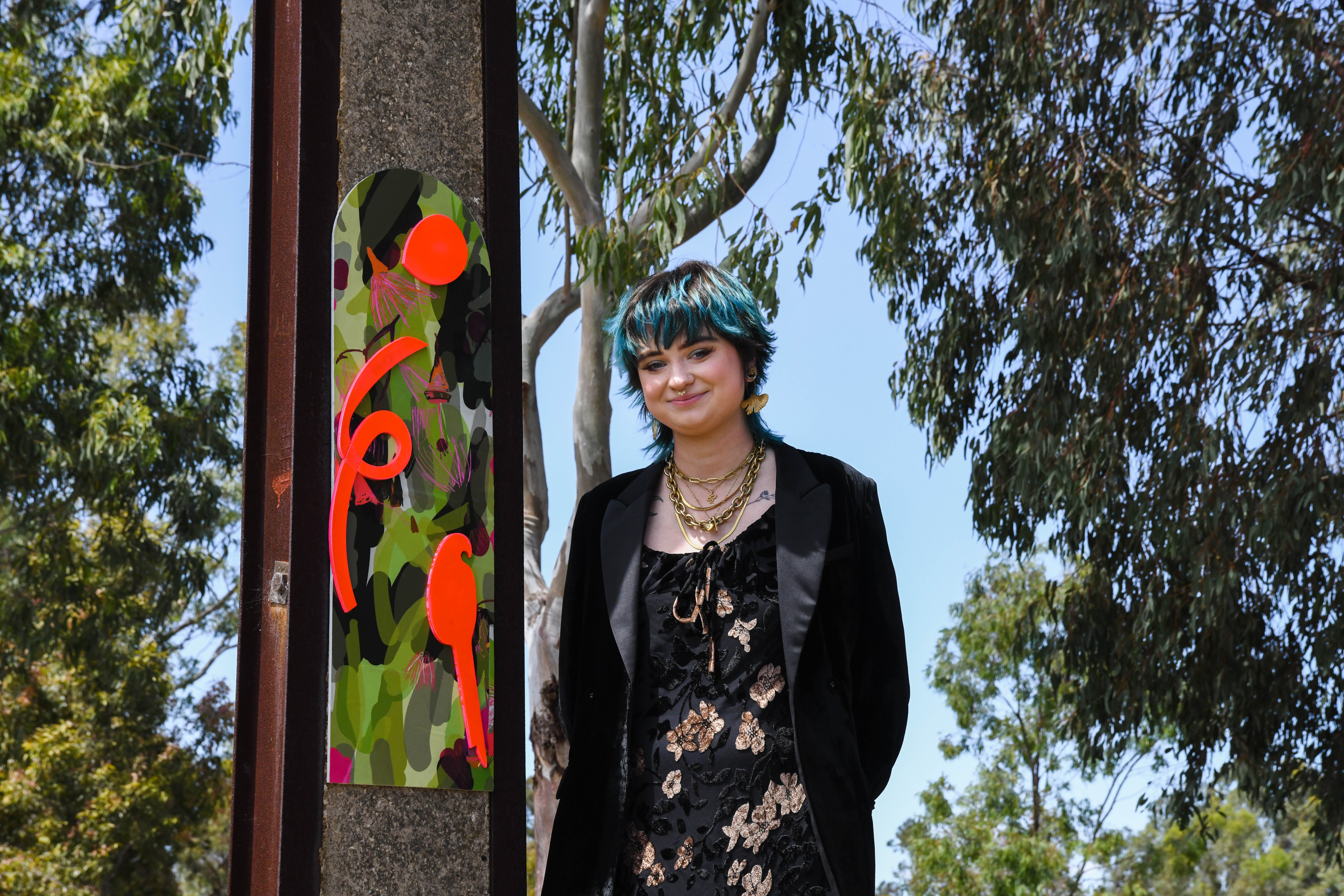
Chloe Noble (Flinders University) is an emerging visual artist who is primarily a painter working in watercolours, oils, and acrylics. They often paint expressionist portraits, figurative paintings and impressionist landscapes. Over the last couple of years, they have begun delving into the worlds of video, digital and installation art.
Photo by Jack Fenby.
Danny Jarratt (University of South Australia) is an emerging artist based in South Australia. Their practice is project-based, with themes exploring escapism, video games as a cultural object, queerness, and painting. Danny’s practice is both political and shaped by personal experience.
Photo by Jack Fenby.
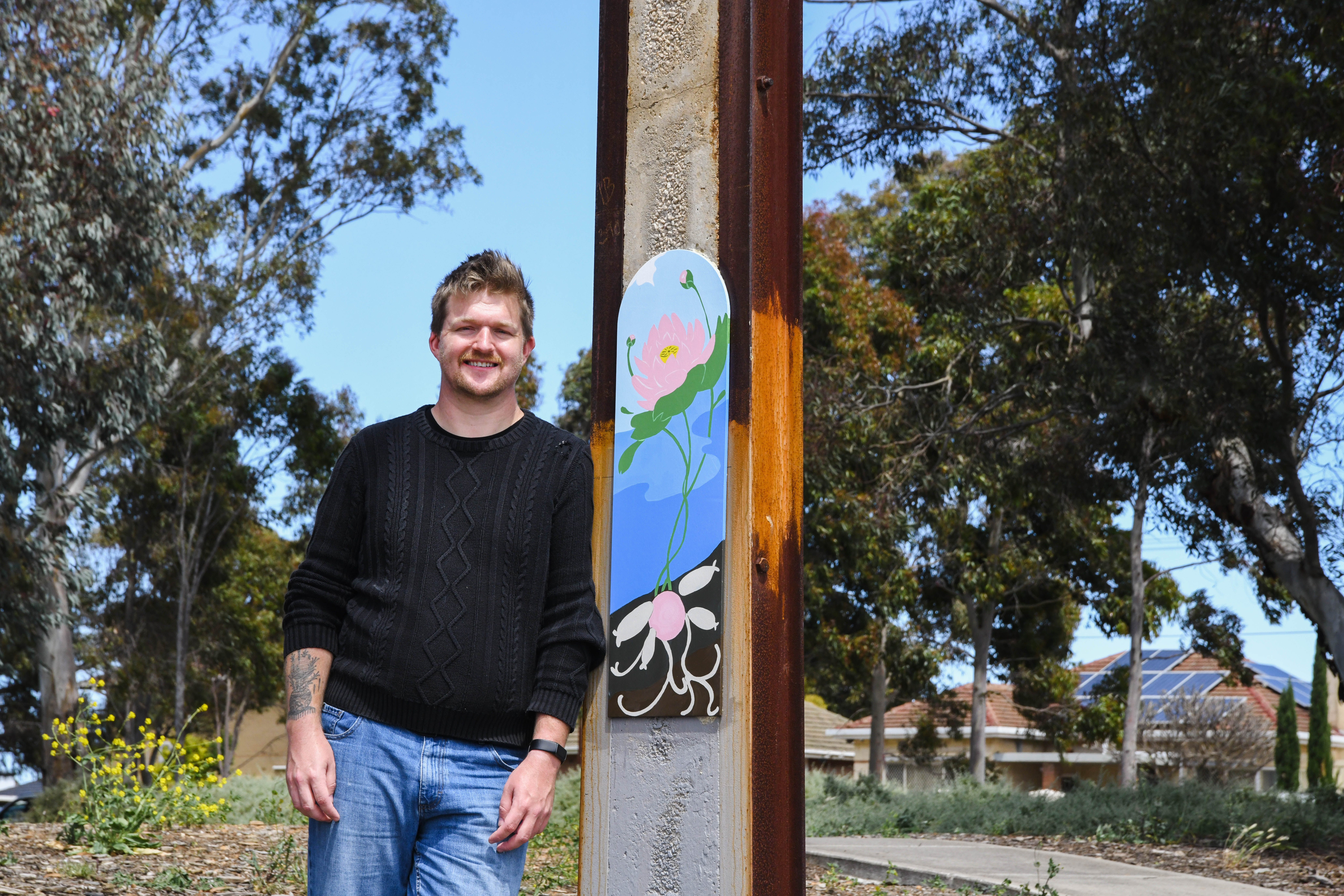
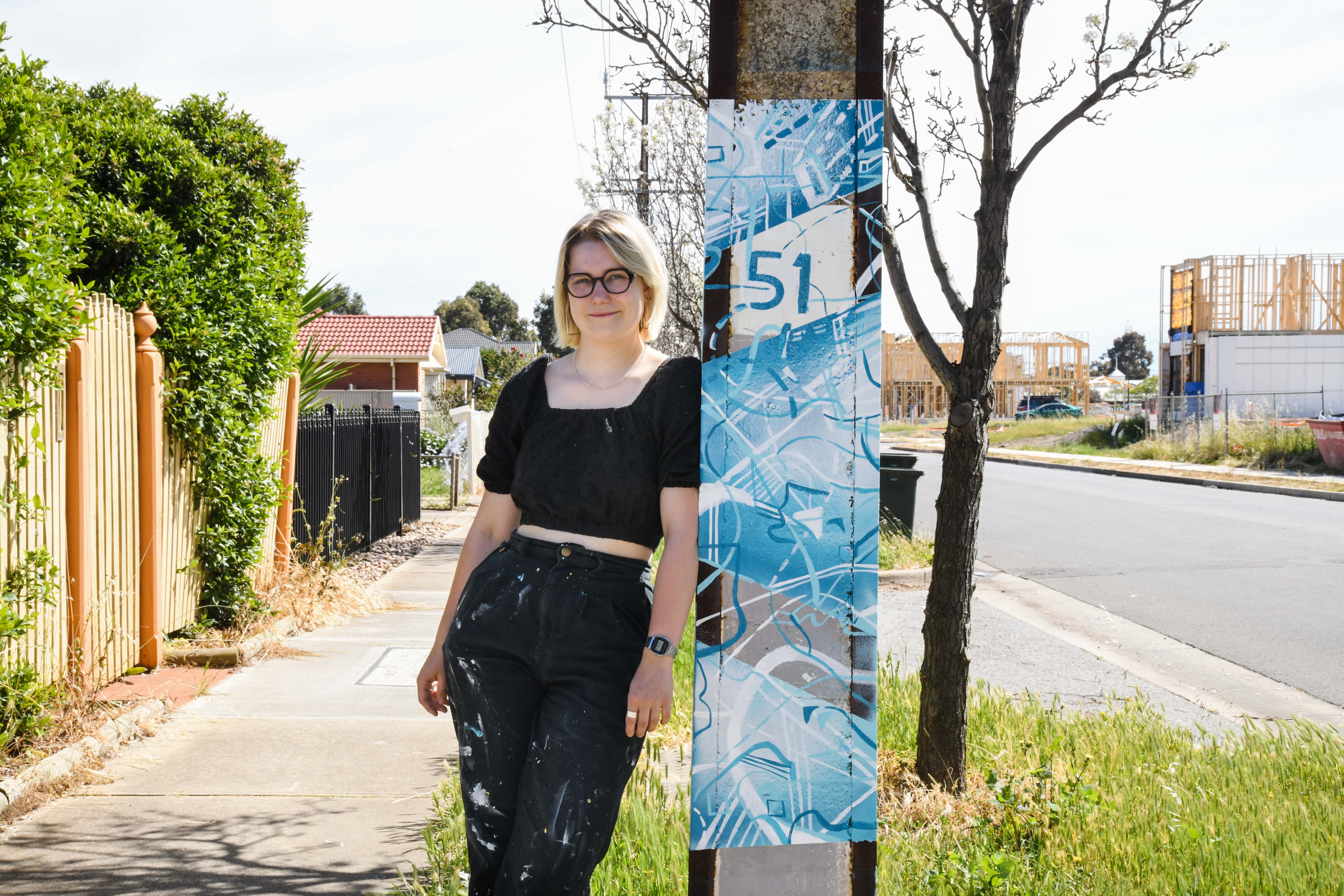
Miriam Sims (University of South Australia) is an artist practising in Tarntanya (Adelaide). Her practice expands across sculpture, installation, glass, drawing, and performance, where she explored slippages in language, meaning, and image-making. Her practice fits into a wider discourse of precarious public practices, critique and cultivate of moments of improvisation within built environments.
Photo by Jack Fenby.
Neville Cichon (University of South Australia) is an emerging photographer based in Adelaide, whose visual arts practice aims to translate the complexities of climate change, by referencing our relationship with urban environments.
Photo by Jack Fenby.
2023 The Stobie Pole Project Artists:
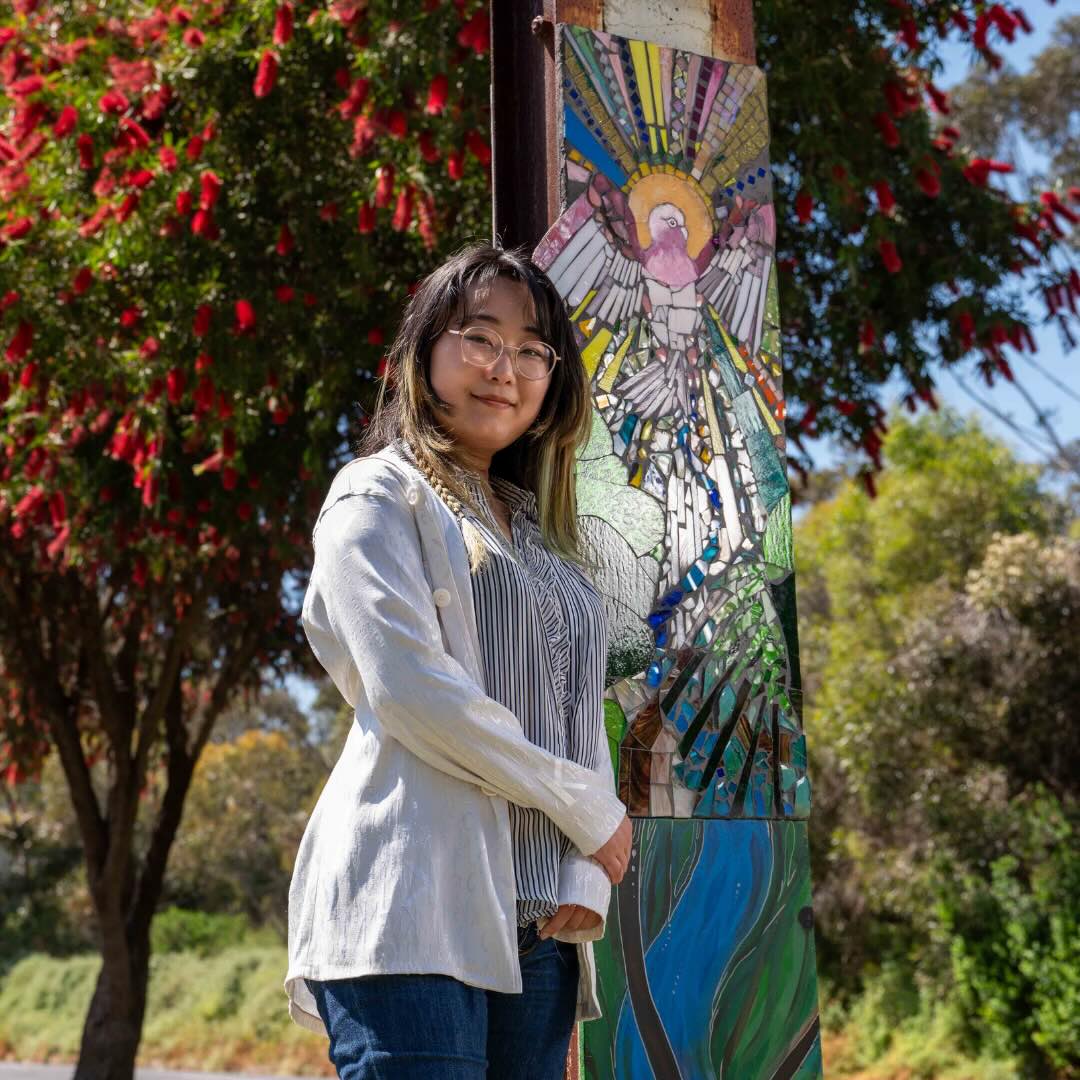
Photo by Naomi Jellicoe.
Photo by Naomi Jellicoe.
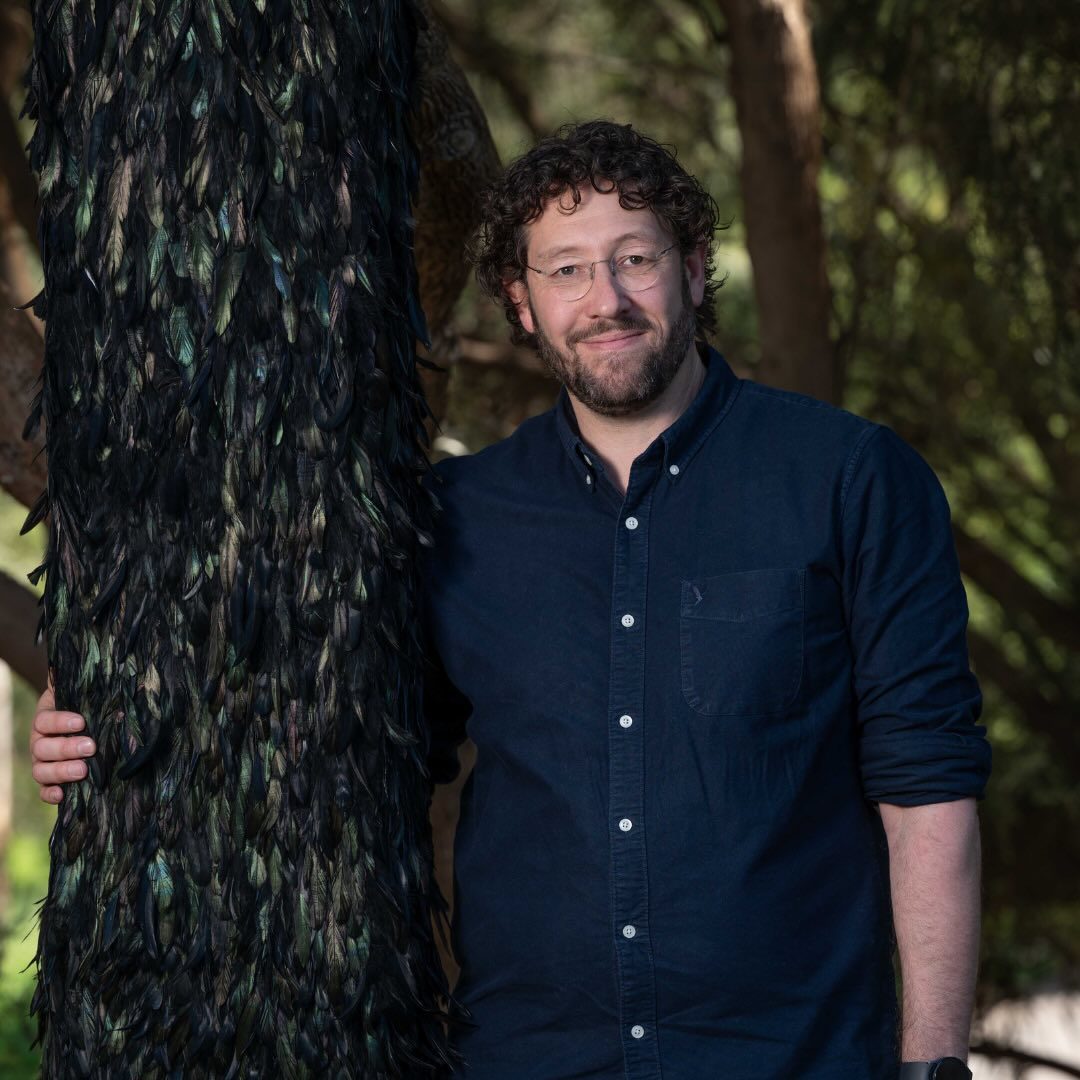
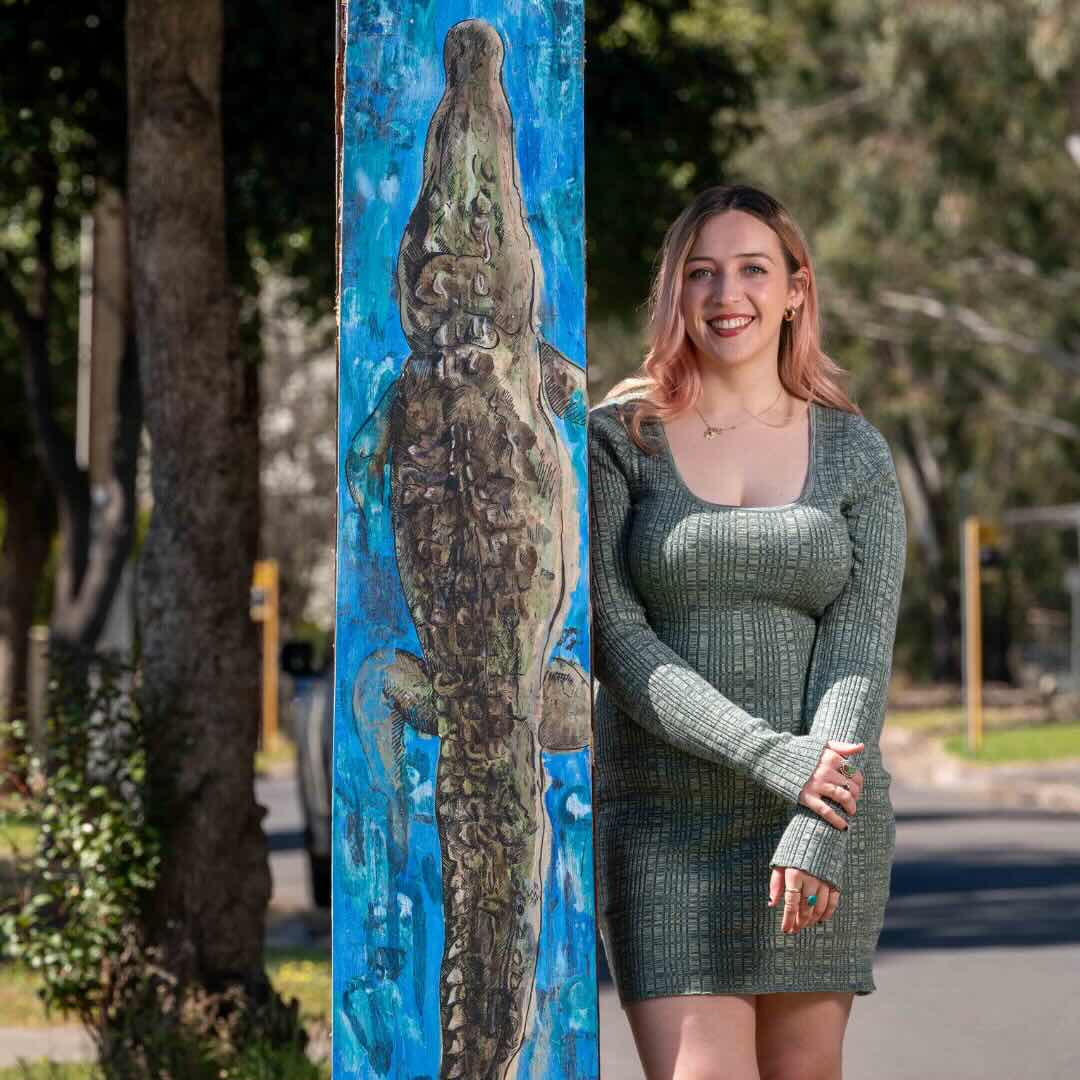
Photo by Naomi Jellicoe.
Photo by Naomi Jellicoe.
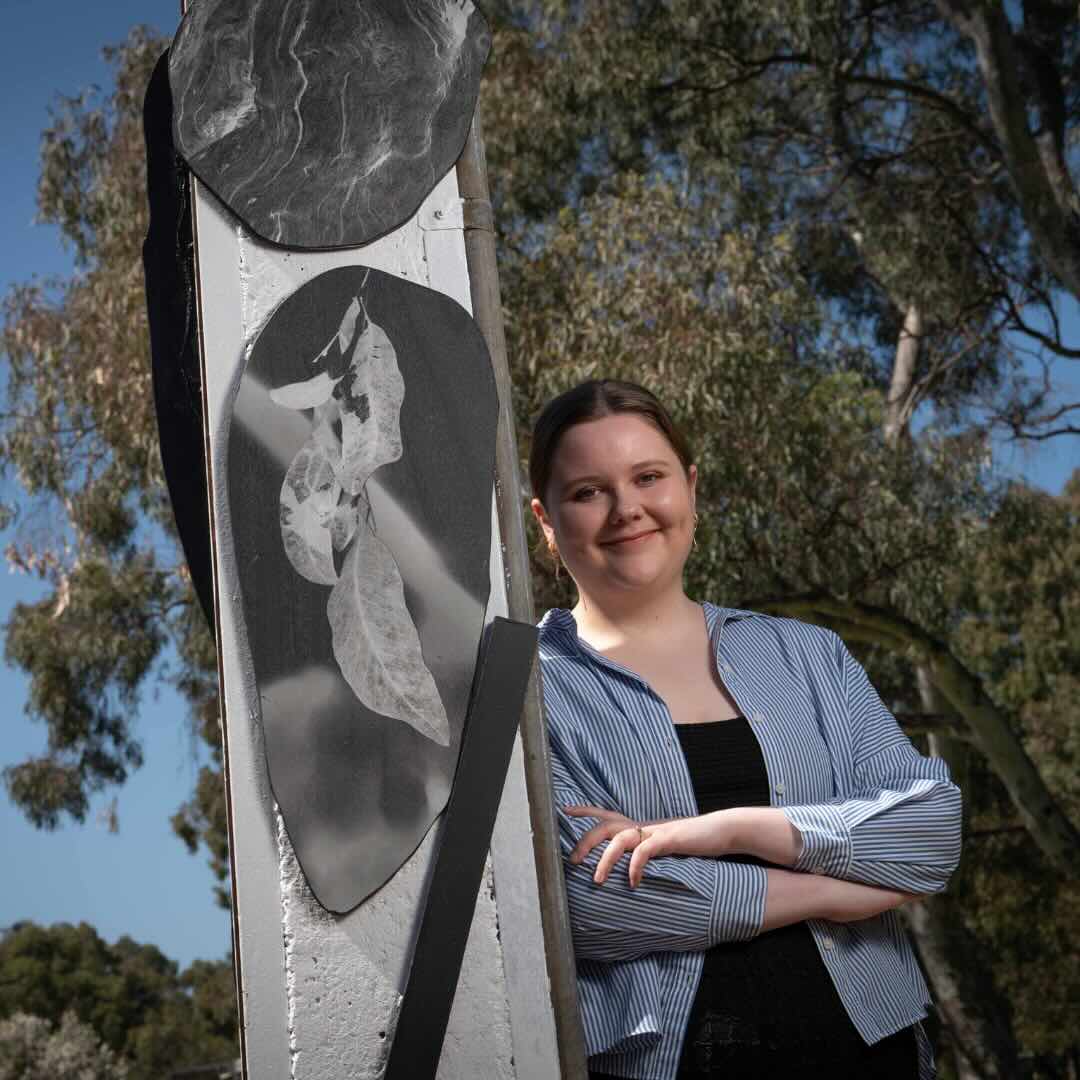
2024 The Stobie Pole Project Artists:
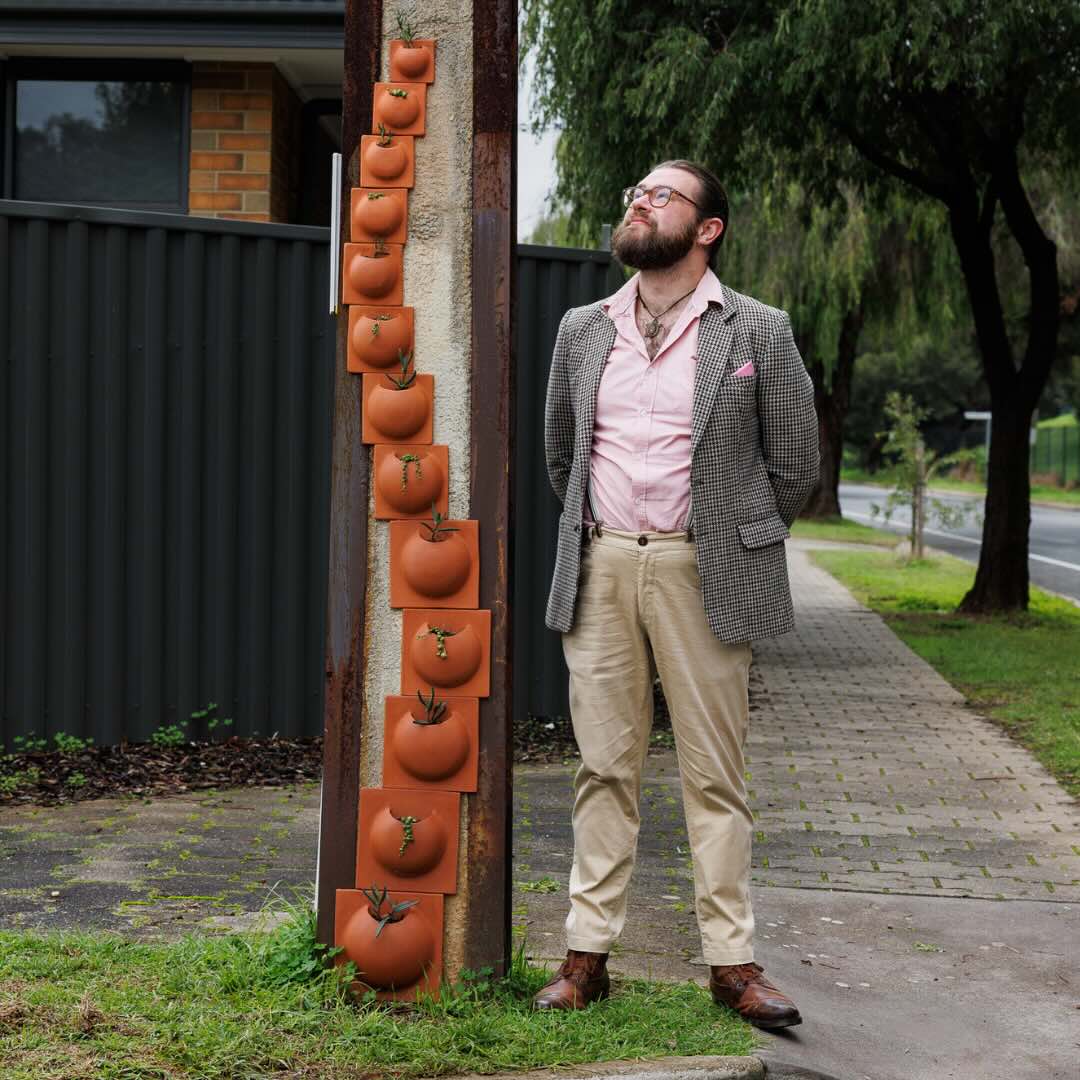
Photo by Rosina Possingham
Photo by Rosina Possingham.
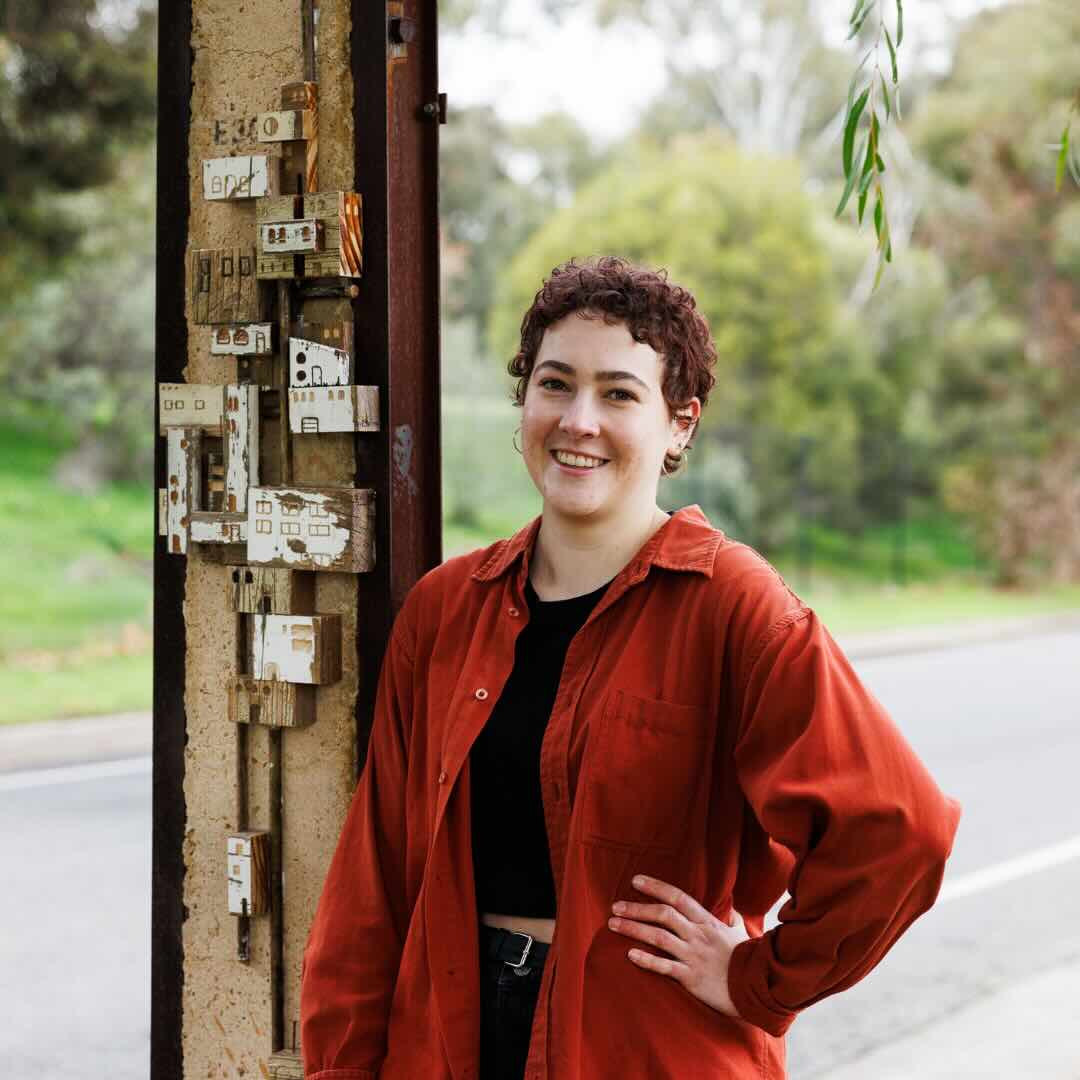
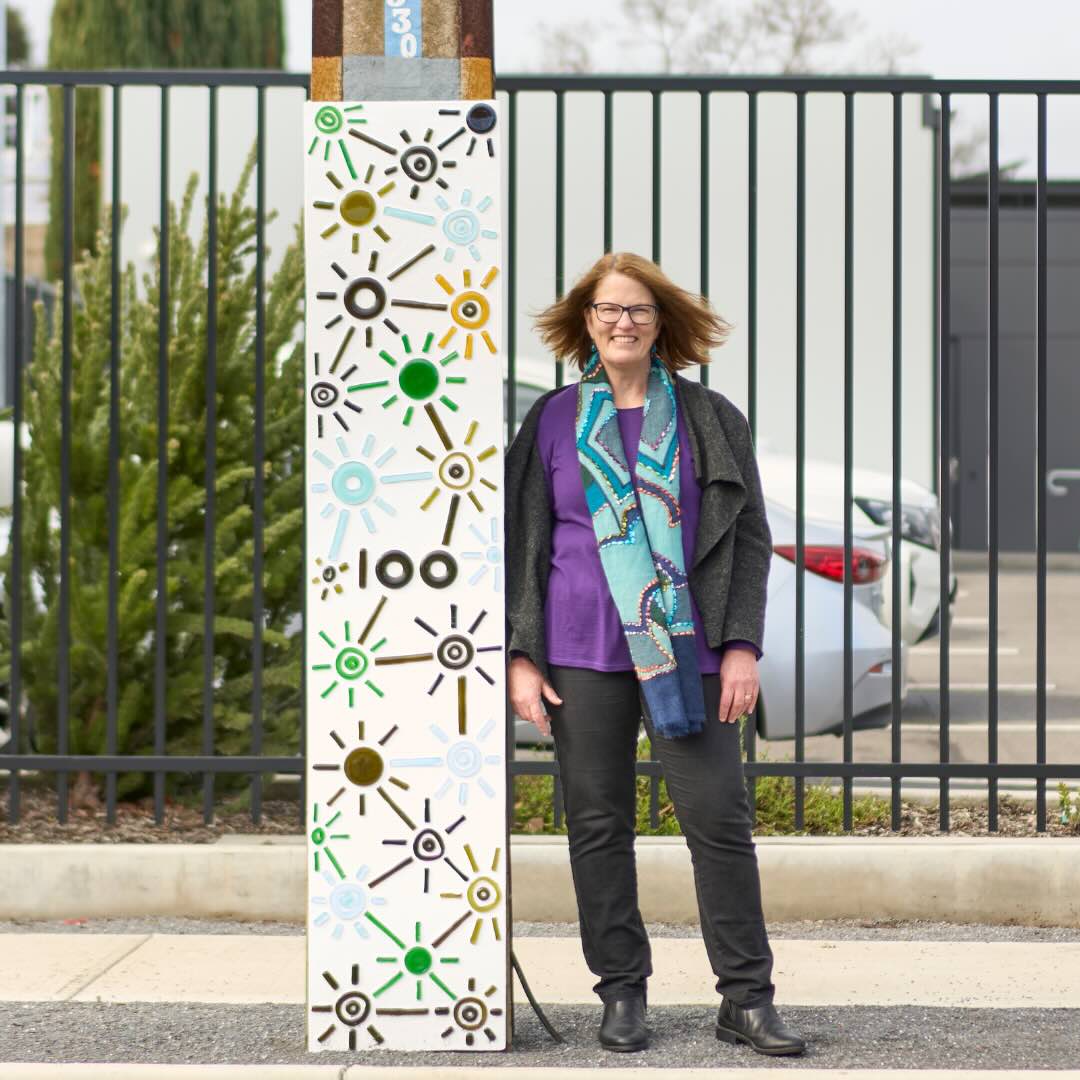
Photo by Sam Roberts.
Photo by Rosina Possingham.