

Tiarnie Edwards, 2024. Photo by Sam Roberts.
Tiarnie Edwards is a Ngarrindjerri emerging artist based and working on Kaurna Yerta.
Their illustrative style works are aimed at storytelling through visual knowledge which they have translated to ceramics, printmaking, drawing, and painting. Their practice reflects their experiences and identity as a Blak person in contemporary so-called Australia and hopes to elevate the voices of not only the Indigenous peoples as diverse individuals and multidimensional experiences but wider marginalised voices of the everyday individual.
“I don’t know the first time I did art.” Says Tiarnie. Their mother and they lived next to a community house where they would always go, painting alongside the old ladies there. They didn’t have much money so they would spend their time painting at the community centre, eventually sparking their love for art.
Tiarnie’s inspirations are diverse, though when it comes to ceramics, they are heavily influenced by the works of English artist Grayson Perry. Especially Perry’s work around identity and his politically charged work.
For the longest time, Tiarnie tried to avoid having any messages in their art and now they dislike the idea of those that purposefully do so.
“As I grew as a person, I became more outspoken about my politics and about who I am,” they say. This changed their relationship with the way they now create their art. Their latest body of work encapsulates the experience of Aboriginal people growing up in contemporary Australia, navigating white spaces in urban environments. It emphasises the need to preserve your culture while existing in those spaces.
Emphasising their introvertive nature, they mention, “I don’t socialise a lot, but I love people. I find people fascinating. The last work I did was bodied around people that I had the privilege to have met in Aboriginal studying and academic places,”.
To Tiarnie, the diverse ecosystem of identities within the community acts as a major catalyst and inspiration for their work and allows for a consistent flow of new concepts. While discussing their creative process, they tell me about their creative process and how they let the process lead rather than lead the process.
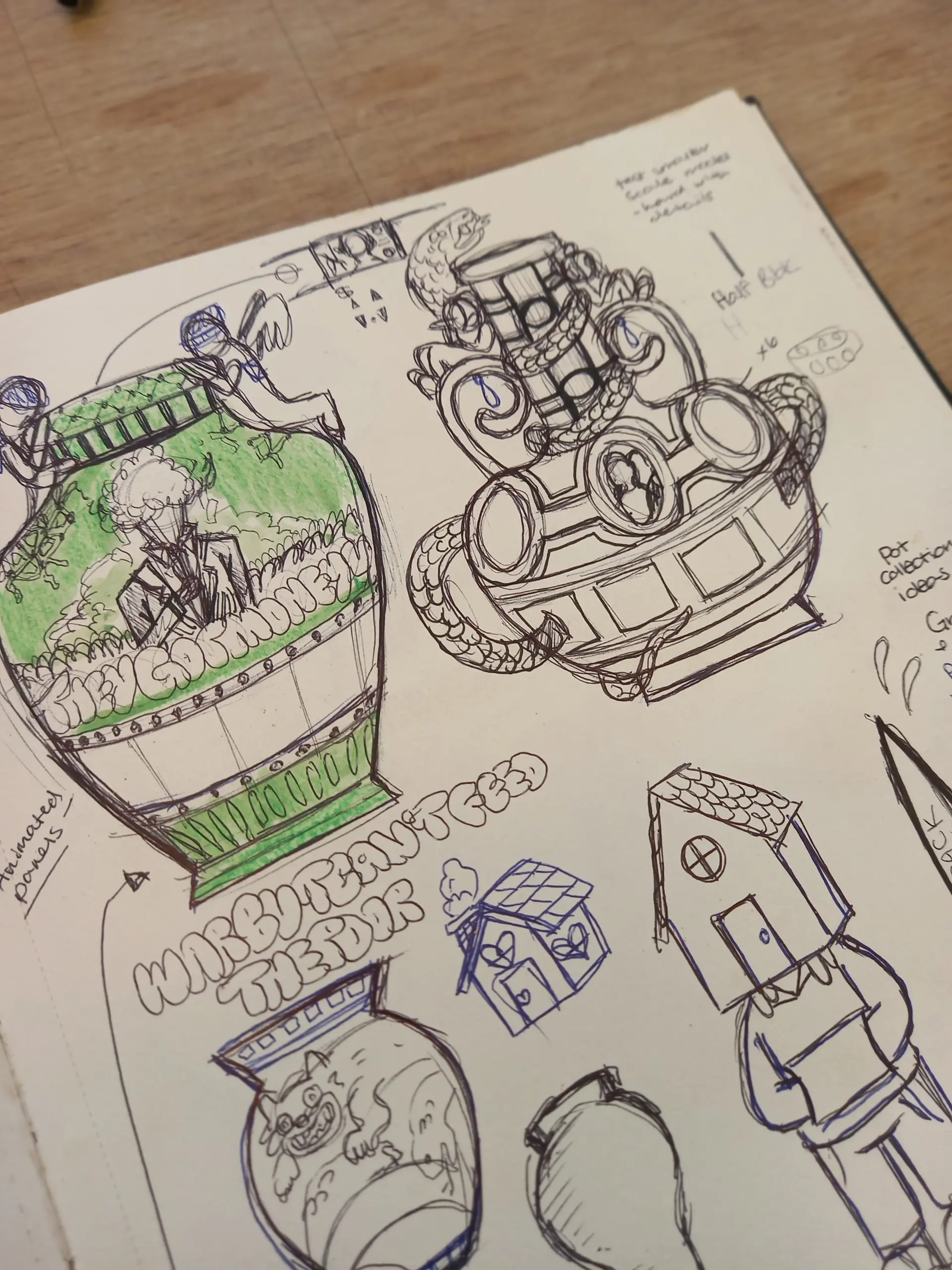
Sketches from Tiarnie’s Sketchbook. Photos by Tiarnie Edwards.
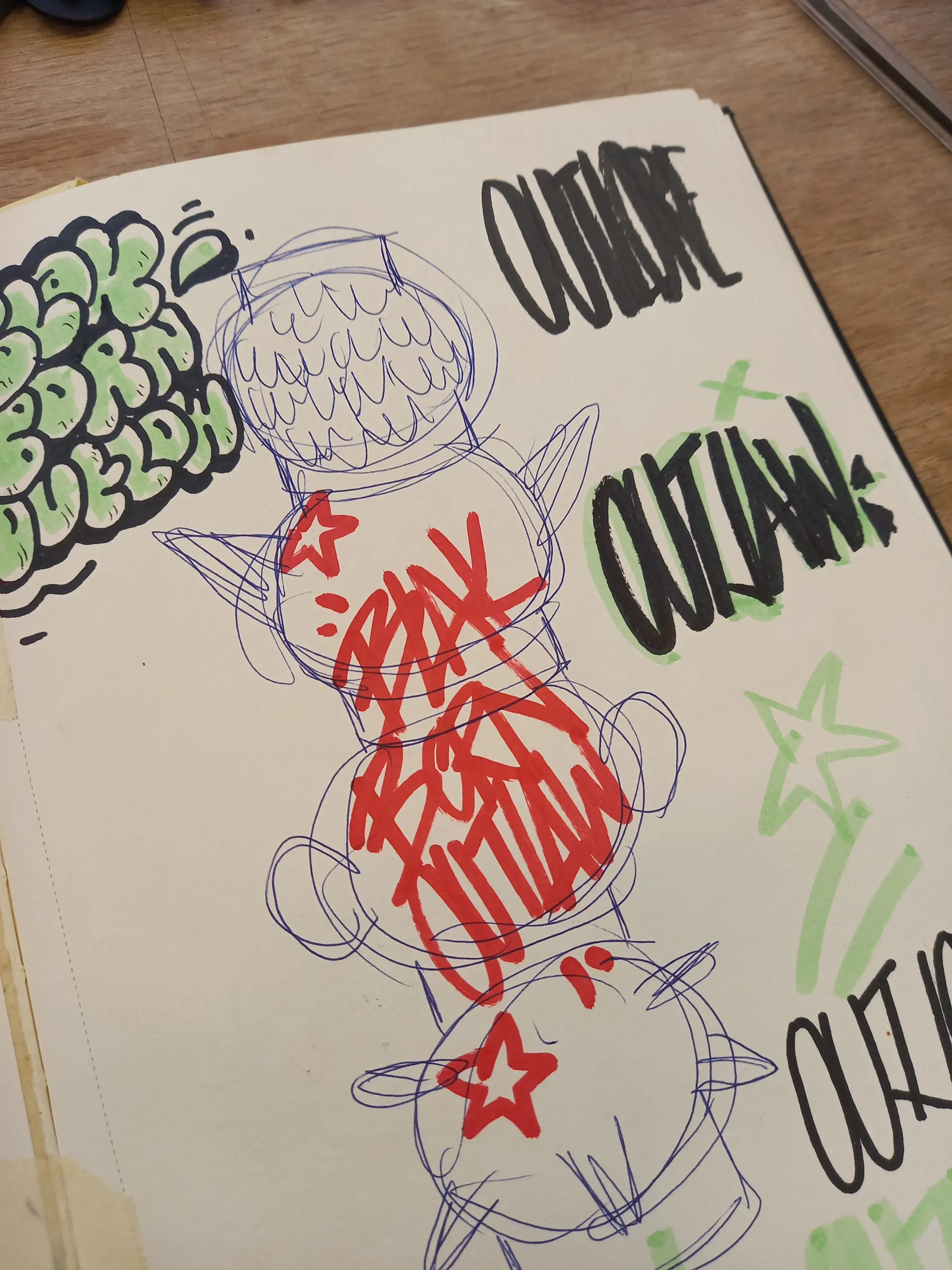
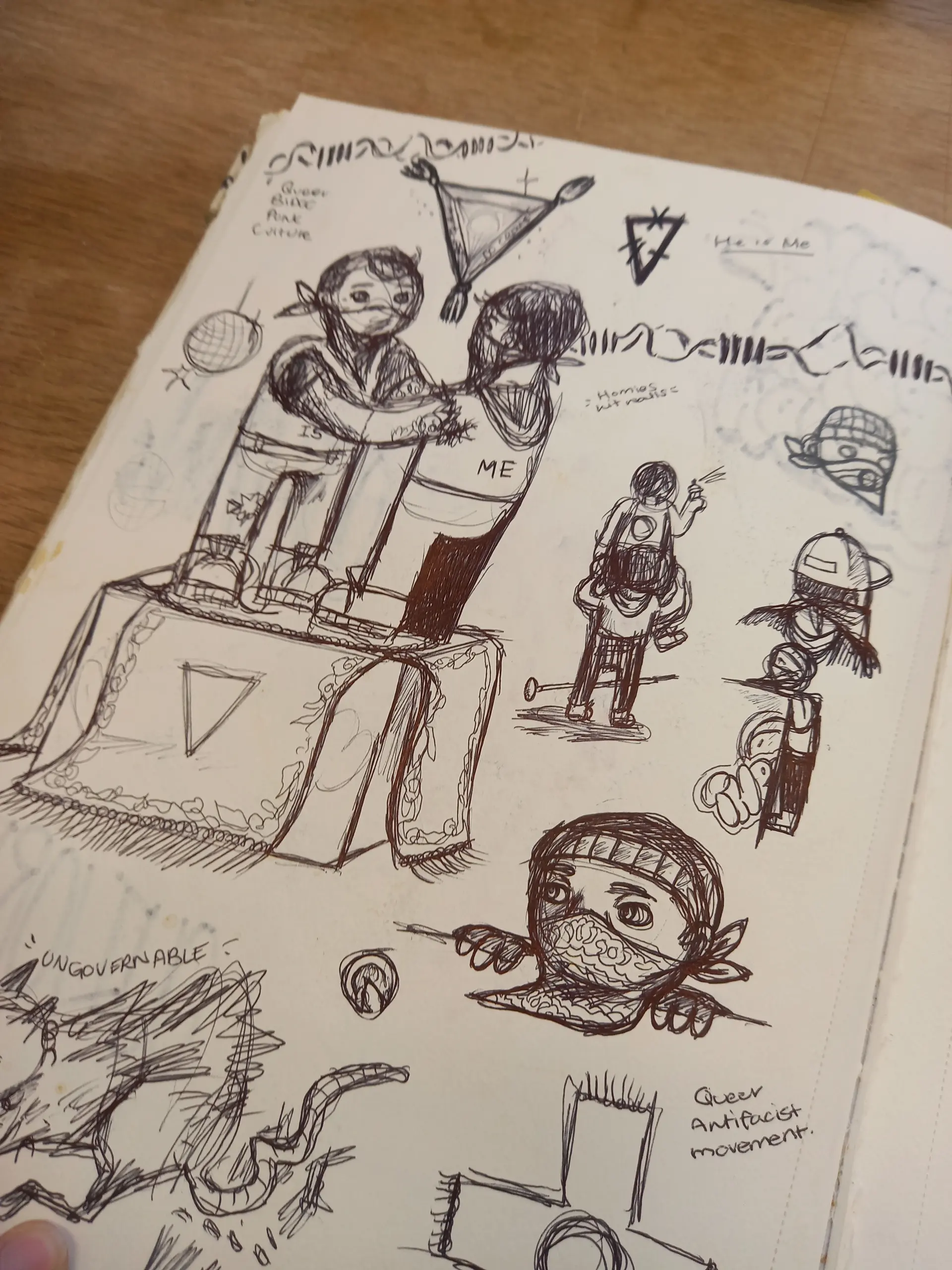
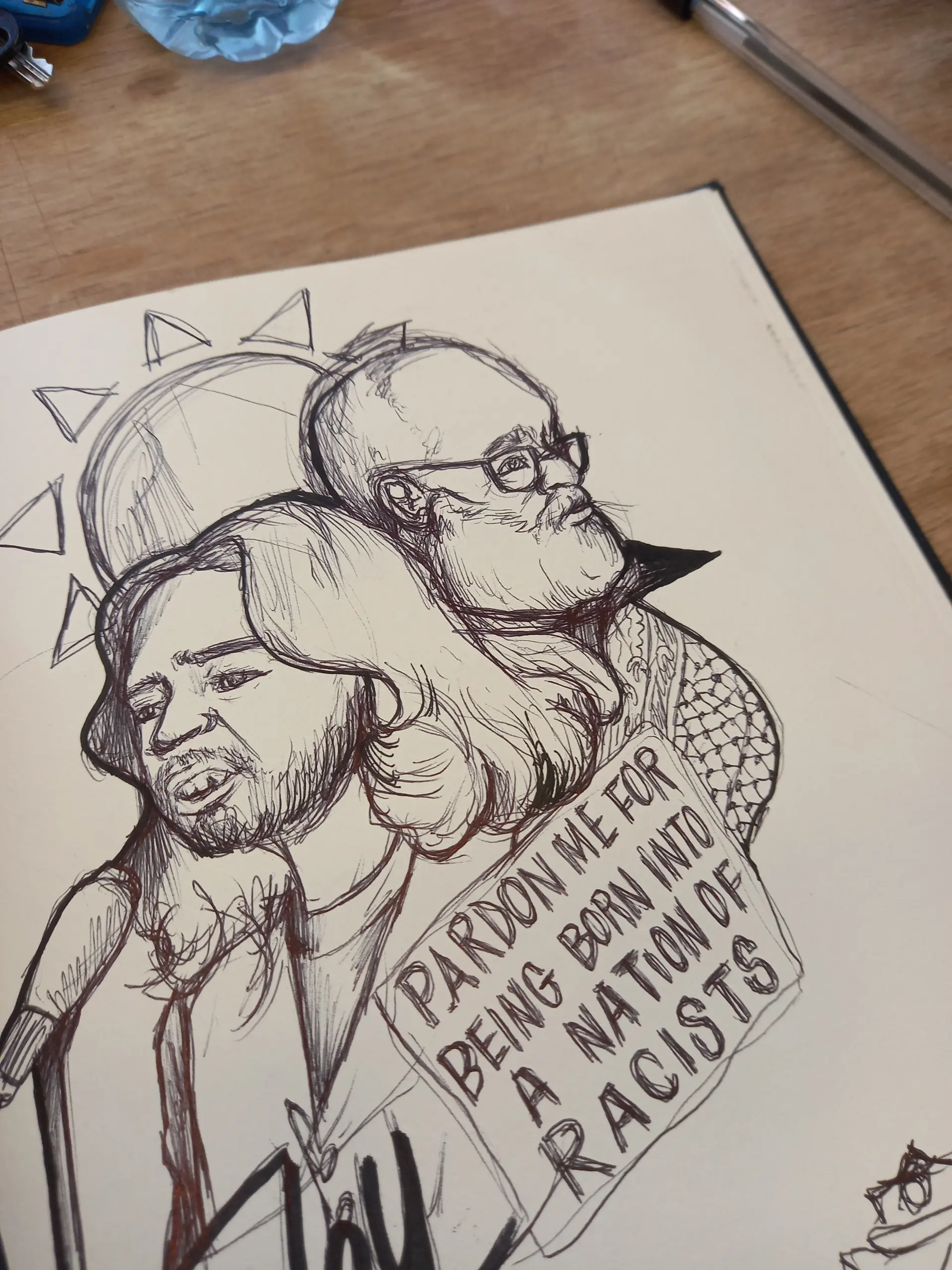
“I will fill my sketchbook with a million sketches, and I think the benefit of being an emerging artist is that you don’t have much of the knowledge to say, “That’s not going to work”, so you just do it anyway!” They say.
Coming from an illustrator background, Tiarnie took a likeness to ceramics from their time in University. Alongside their experimental pieces, they have been dabbling into traditional ceramics forms and domestic objects such as pots to verse themselves. However, a technique they enjoy working with the most is coil building.
“I tried coil building for the first time about two and a half years ago.” They ponder. “Now that I don’t have all the equipment I was blessed with at University, I handroll all my coils, and that’s become a really nice process even though it takes a really long time.” For Tiarnie, coil building has become meditative, a process they slow yet steady process that they have taken a great likeness to. However, it has not stopped them from trying out different art forms such as their intricately carved wooden pieces for the Stobie Pole Project 2024.
Working on several projects at the same time, I ask them how they decide when a piece is complete to which they tell me the importance of stopping when necessary and accepting that most probably your art will never look like what you had originally planned for and that’s part of the process. “At a certain point, you have to make concessions and love whatever has come out of all the work you’ve done.” They say.
Amongst an array of works sits their most recent piece, a figure with a house for a head. Tiarnie mentions is an expansion upon their last body of work and prototype that has worked out quite well so far. The inspiration for this particular piece struck from a book club with their friends.
“I read about the idea of prisons in our landscapes as things we don’t really acknowledge, they have become natural in our landscape. So I’m trying to kind of meld that exploration of how the structure of our housing has melded into it and it’s a lot harder to create community and spaces.” They explain.
Having moved to a city from the country, Tiarnie tells me that they find it to be odd not to know their neighbours and the people of their community. With their next series of work, they wanted to explore this feeling and comment on it. Their personal life experiences serve as inspiration for their art.
“It’s easier to pause and be like: what makes want to make art in the first place? And most of the time it’s just living life.” They tell me. This way of thinking allows them to not get creative blocks. In addition, they consume a plethora of media, books, and other art to stay informed and form their own opinions, enabling them to stay consistent and produce new work.
As the conversation progresses we discuss the impact of Helpmann Academy on their emerging art career, “The Helpmann Academy came at a very pivotal time for me as I was just finishing up my degree.” They mention. Tiarnie was certain that they wanted to be an artist but they were not sure which steps to take next. But getting selected for the Helpmann Academy Graduate Exhibition opened the door to the greater world of art post-university.
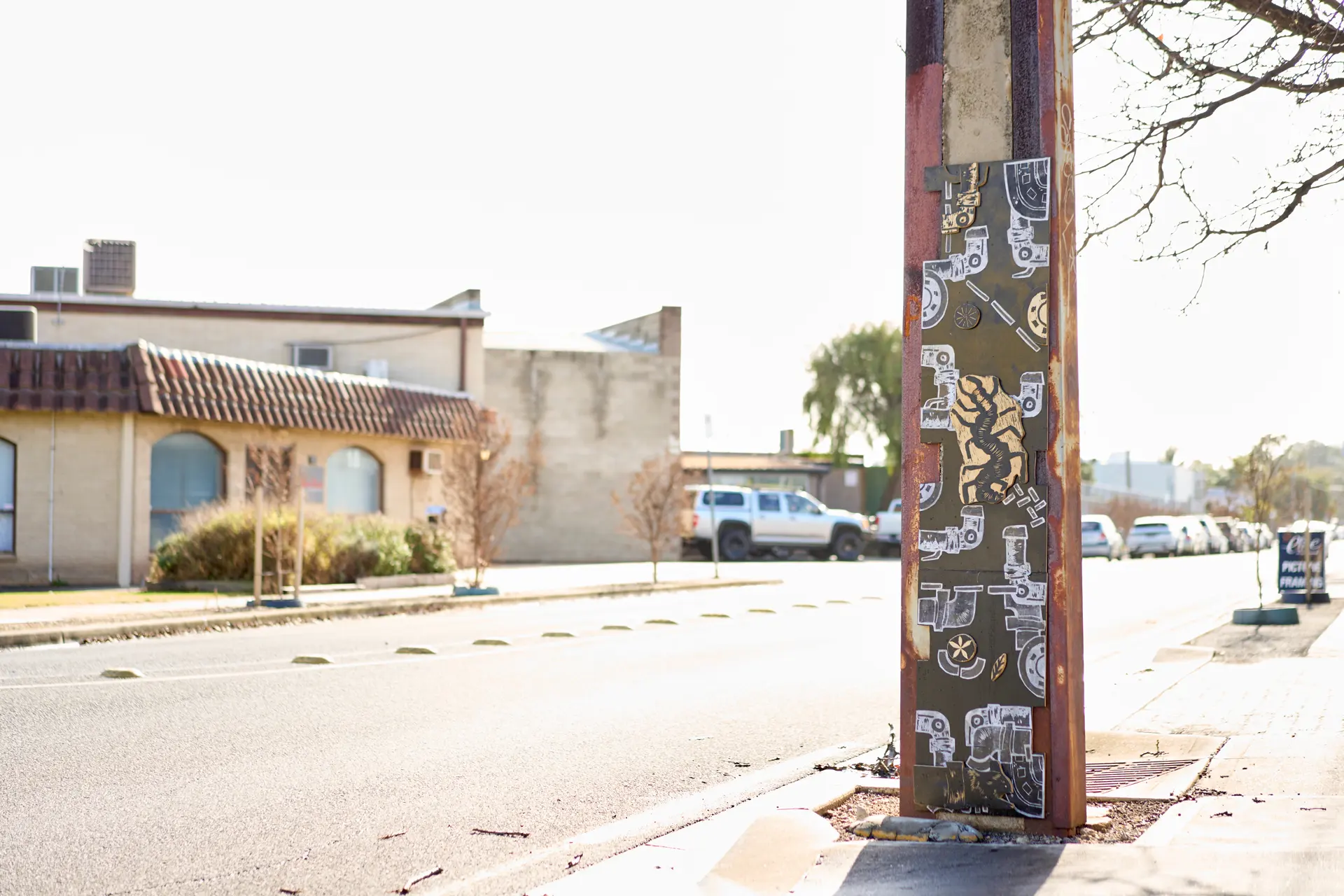
Tiarnie Edwards’ Stobie Pole at SA Power Networks on Hampton Rd. Photo by Sam Roberts.
“It was a surreal feeling. It was also very weird to be like: I’m an artist, and now I have act like an artist.” They reminisce. Through the Helpmann Academy Graduate Exhibition, Tiarnie was awarded a residency at FAB studios, marking a considerable upgrade from creating ceramics on their bedroom floor. This opportunity has allowed them to engage with other resident artists, explore metalwork, and try new art forms in a supportive and nurturing setting.
Additionally, they have pursued several other Helpmann opportunities, including the recent Stobie Pole Project 2024, where they were guided by established artist Christine Cholewa. Under her mentorship, they developed their skills in producing public art. You can find Tiarnie’s Stobie pole artworks at both Windsor Gardens and at Keswick, near the SA Power Network’s office.

Tiarnie Edwards with their Stobie Pole at Windsor Garden. Photo by Rosina Possingham.
“It was good to work with people I didn’t know, and to have the experience and knowledge of how to actually deal with councils and budgets and what goes into doing public art is really valuable knowledge to have going forward.” They comment. Although daunting at first, they found this opportunity to be fruitful and they look forward to producing more pieces for the public.
Tiarnie further discusses with me the impact Helpmann Academy has had on them and their career. To them, not only has it presented career progression opportunities, but it has been a major support system, allowing them to be more confident, learn necessary business skills, and connect them to other artists and professionals in their field.
Having been part of Helpmann Academy for over eight months, Tiarnie advises other emerging artists, who have graduated or are graduating from university, to familiarise themselves with Helpmann Academy.
“I would say, get to know the Helpmann group a lot sooner. Yeah, just having those connections with the crew, because it’s a wonderful place and they are here to help you.” Says Tiarnie.
In the future Tiarnie hopes that ceramics stays with them and would love to make giant pieces without having to worry where they will get fired. Before we wrap our conversation, I ask Tiarnie the most important question: What do you hope people take away from your art?
To which they reply, “I always hope that the people can see themselves in it in one way or another, the social commentary of the way life is, the fact that we’re all probably closer to each other than, I think most of the time, we let ourselves believe we are.”
OUTLAWS by Tiarnie Edwards. Photo by Bente Andermahr.
About the Author
Aryani Singh is a writer and musician, with a passion for film, entertainment, and music.
+ stories