
2024

Continuing the conversation with Stephanie Jaclyn and Yusuf Hayat

Written by Nicky Tsz Tung Li

Stephanie Jaclyn on the set of her film, Freemales.

Continuing the conversation with Stephanie Jaclyn and Yusuf Hayat

Helpmann Academy has been dedicated to supporting emerging creatives realise their ambitions and build viable professional practices for thirty years.

When the Helpmann Academy turned twenty-five in 2019, a video Q&A series was produced with several key supporters and artists to discuss the organisation’s impact on South Australia’s creative industry.

In this milestone year, we invited two of the featured artists, Stephanie Jaclyn and Yusuf Hayat, to continue the conversations.

Jaclyn is a filmmaker and screenwriter who graduated from Flinders University with a Bachelor of Creative Arts (Screen Production) in 2014.

“To me, film is the ultimate artform. You not only work with every type of artistic discipline, but also with people in those areas. It’s a highly collaborative thing to do. Filmmaking is a very wonderful and entertaining way to impart philosophies into the world, and hopefully, contribute something of benefit, even if it is just entertainment.”
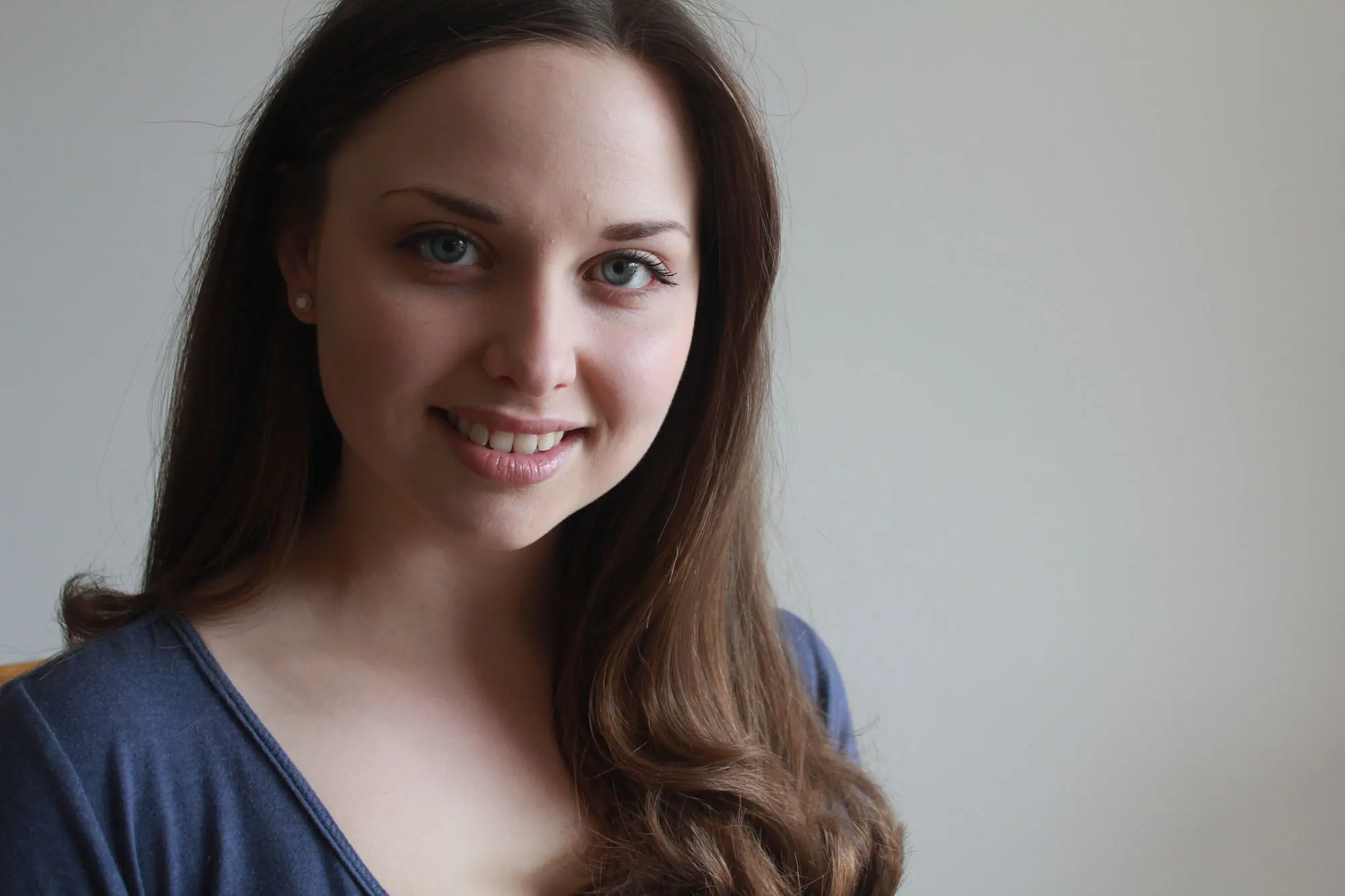
Stephanie Jaclyn. Photo courtesy of artist.

Hayat is a socially conscious visual artist and art administrator who graduated from the University of South Australia with a Bachelor of Visual Arts (Honours) in 2017. Hayat also completed a PhD at UniSA where he focussed his thesis on post-migrant artistic practices of emplacement.
“For me, the interest in the arts is around being seen, but, through frameworks that you don’t recognise.

“We know who we are through the culture we are part of.

“We have to enter the space of cultural production, so we can present ourselves more sincerely and tell our stories on our own terms.”

Although Jaclyn’s and Hayat’s practices are vastly different, when reflecting on their most memorable time with Helpmann, they thought of their trips to London.
During his honours year, Hayat received a grant to travel to The Price’s School of Traditional Arts in London to attend two one-week intensive workshops on sacred geometry.
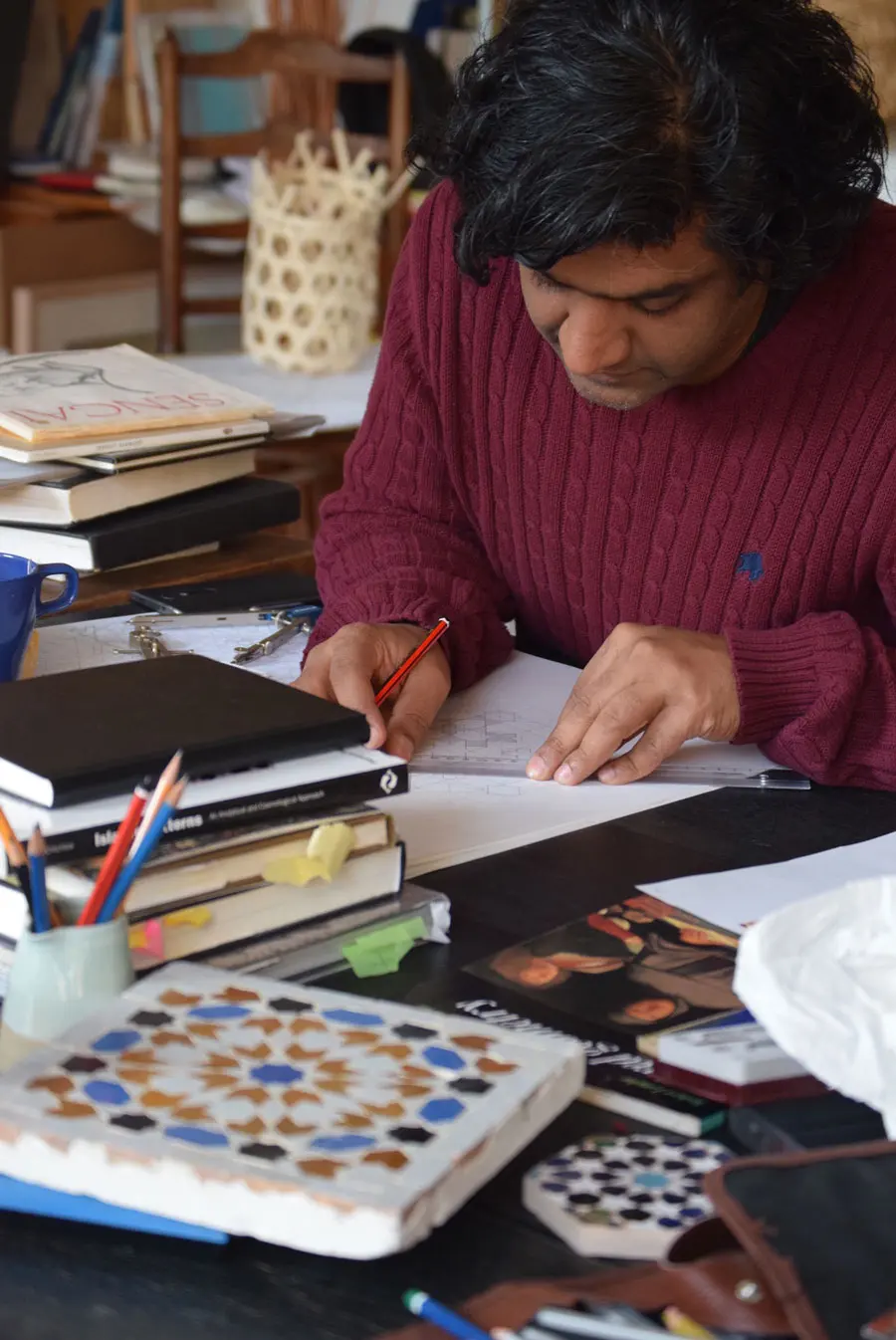
Yusuf Hayat also was a resident at the British School at Rome in 2018.
“There’s something about being in-person with someone who has done this stuff through and through, with a group of people who were very interested in it. That really shifted my thinking and approach, and underpinned so many of the other works I made.”

Jaclyn received a fellowship supported by the James and Diana Ramsay Foundation which afforded her the opportunity to undertake a tailored career development program in London.

“The fellowship was multifaceted. I went and studied at The Met Film School in London. We would write, direct, edit every two weeks. It was a very intensive creation process.”

Prior to her trip, she had been receiving a mentorship from filmmaker Scott Hicks which was made possible by the Helpmann Academy. Hicks set up an opportunity for Jaclyn to shadow director Jessica Hobbs on the BBC series The Split during her time in London. Jaclyn also attended the London Screenwriters Festival which consolidated her abilities to pitch projects to broadcasters – a skill she still finds useful in her career today.

“In terms of building a foundation, the fellowship was hitting all the areas to develop into a successful filmmaker.”

“What the Helpmann Academy allowed me to do was to not only develop and think about my craft in terms of skills and execution, but it also enabled opportunities that helped me understand and navigate how the industry functions. If you want people to see your art, having a firm handle on how the industry functions is important.
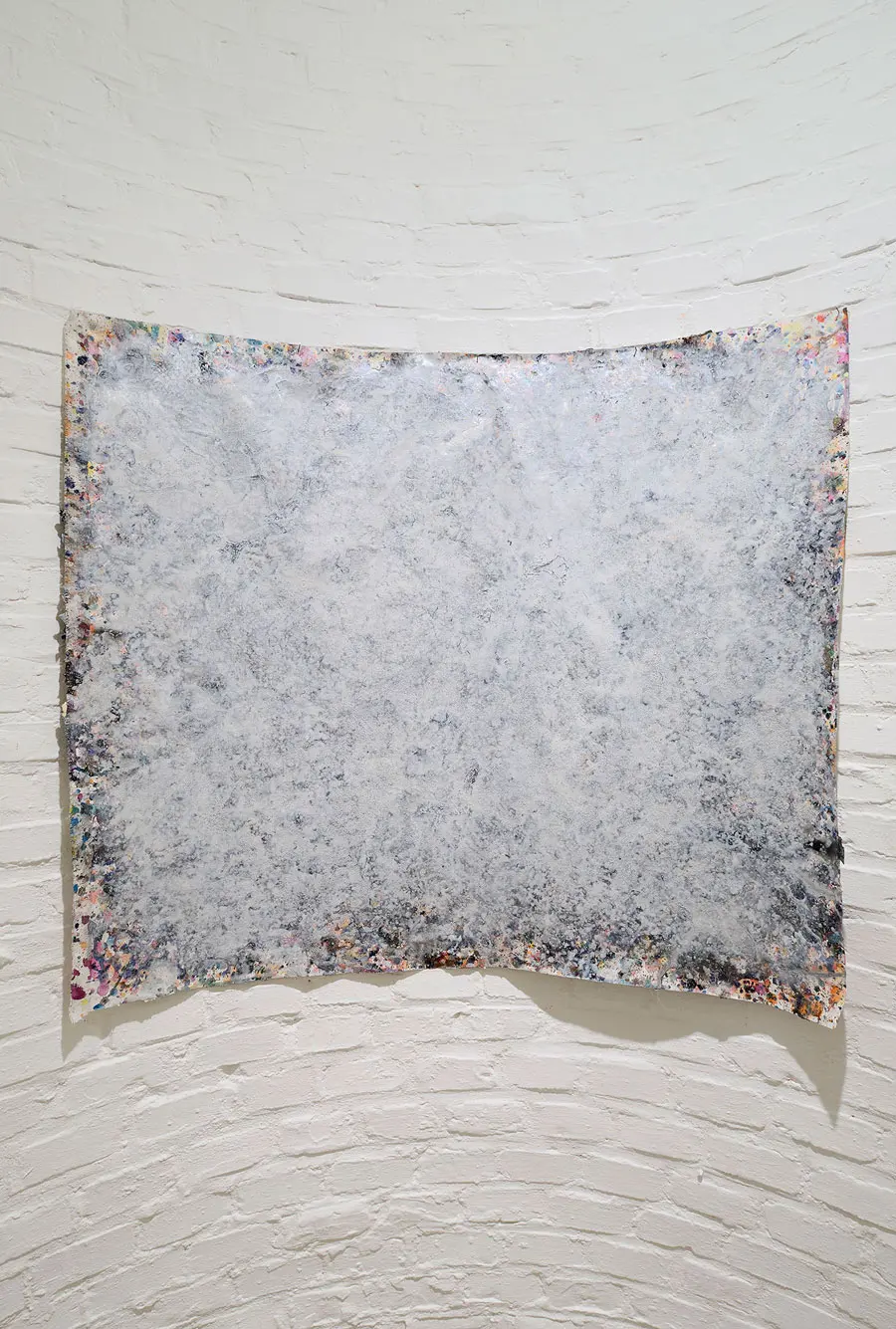
Stephanie Jaclyn on the set of her film, Wake. Photos by Angelique Joy.
“There’s a lot of things that I’m doing now and a lot of opportunities that I’m coming across now, I feel like the roots of them stem back from opportunities enabled by the Helpmann Academy.” Proactively seeking opportunities is essential for an emerging artist to embark their creative career. Jaclyn encourages fresh graduates to apply for grants and opportunities even if it is to gain the experience of failing and being rejected. “Something that I’ve learnt in my career is that failure fuels my drive and trajectory. Rejections and failures are just part of the process of being an artist, especially being a filmmaker. There are so many gatekeepers and so many people who have to give you permission to do your craft. Rejection is inevitable and it is only through failures that you will learn. It is important to start going for opportunities really early, really young. When you do get those opportunities, it signals to the industry that you are serious, motivated and talented.”
Yusuf Hayat, Hellothere, 2018. Installation view at June Mostra, British School at Rome. Photo by Roberto Apa.
Hayat recalls a lack of opportunities when he was building his early practice. “I started my art practice as a mature student without an art CV. There were very few places to go for fundings. If it wasn’t for Helpmann, I don’t think I would have been able to get the support anywhere else.” In 2018, a sculpture Hayat created during his honours year was exhibited as part of the Helpmann Academy Graduate Exhibition. The work was soon acquired by the City of Adelaide. “My biggest takeaway with Helpmann is to ‘stay open to possibilities’. Stay available because lots of other things come out of it, not just what you think.” Hayat is currently working as the Visual Arts and Community Engagement Lead at Nexus Arts and one of the Artistic Directorates at Next Wave. He admits his studio practice has changed, or downscaled. “The work I used to make requires significant investments and fundings. “I was quite lucky at UniSA. They have a lot of resources. There’s a lot of equipment… Unless you’re in a big studio, you might not know the capability of some of those machineries. Through university, knowing the potential of the machinery allowed me to be ambitious in making artwork. “It is very hard to be an artist. Artists have to take a lot of risks. There’s a lot of unpaid work. “When you have other commitments, you have to make a decision of how to prioritise different things.” Hayat finds immense fulfilment in his current positions. He often gets invited to be on panels and have conversations he is passionate about. He also enjoys meeting young artists through his work. “I’m lucky to work with people who are at the early stage of their career. I get to have conversations about their art and the things they’re interested in. I enjoy that part of art administration.” Inspired by the support she has received through various organisations in her early career, Jaclyn also enjoy working with emerging filmmakers. “I spent a year at The Mercury as the Developement Program Manager where I oversaw short film funding and provided industry consultation. I have been able to take everything I’ve learned over the years and pass that onto the next generation of filmmakers. I’ve been proactive in helping people and supporting people, pointing them to the right direction. In Adelaide, we have a very small puddle of filmmakers. It’s important to give back.” In the 2019 interview, Hayat says, “I don’t think anyone does anything on their own. We all owe something to someone else, whether it is ideas or opportunities. In this case, it is opportunities, and I owe it to the people that made it possible.” Helpmann Academy’s persistence in championing for emerging creatives does not only foster their artistries, but also encourage them to uplift the artists after them. We all owe something to each other. The support we receive is to be given back, in form of art or others.

+ stories